Artist

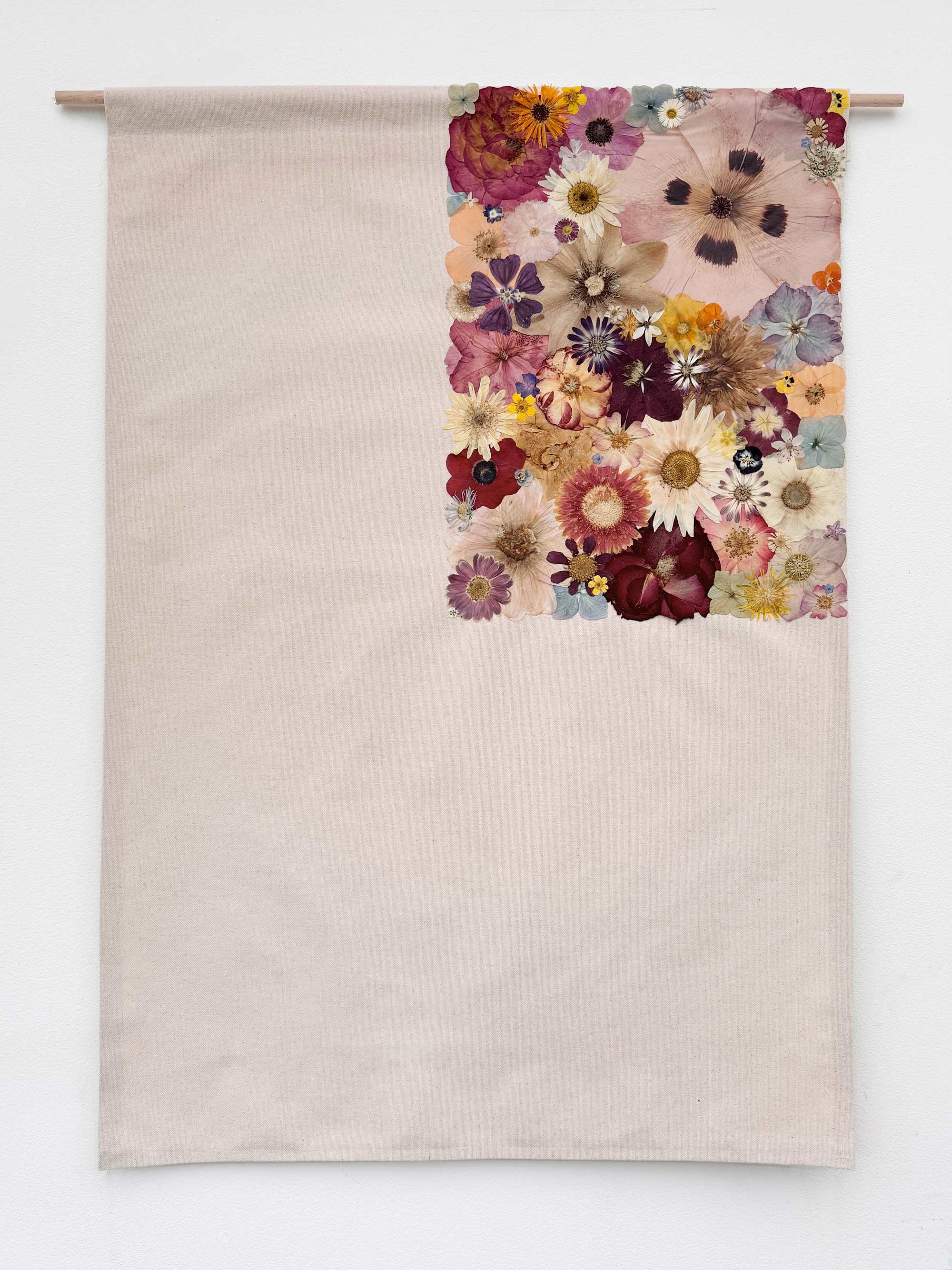
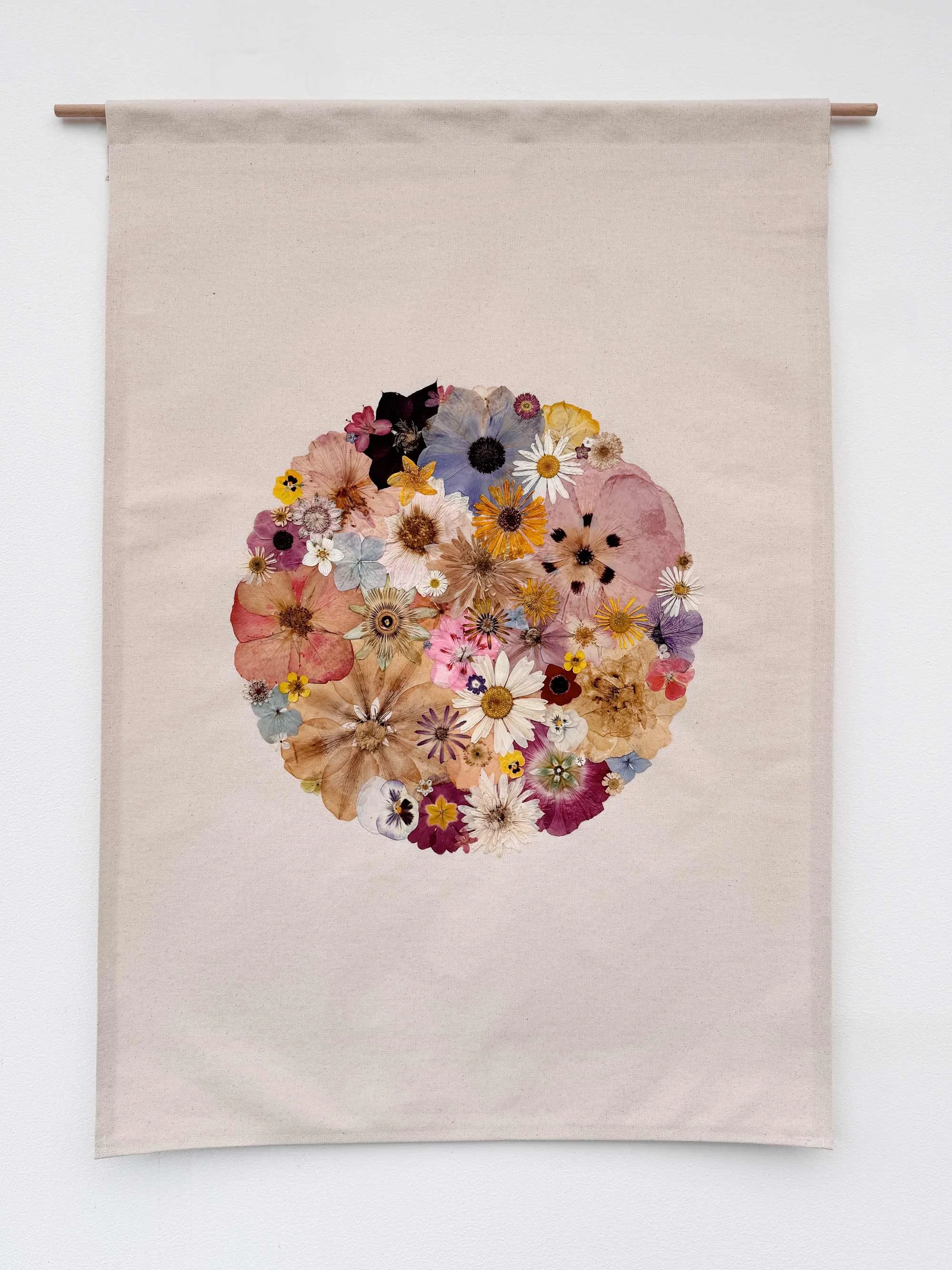
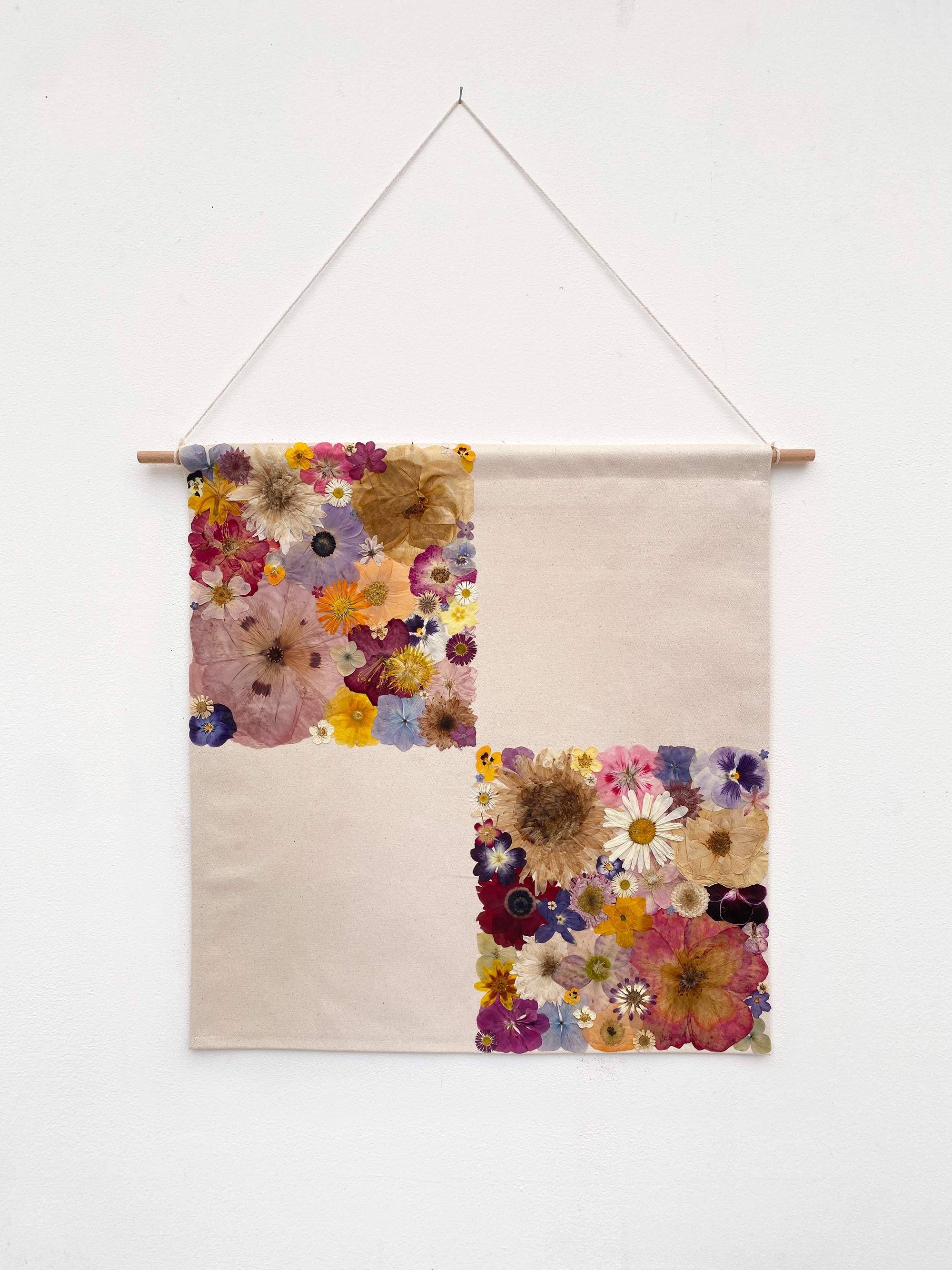
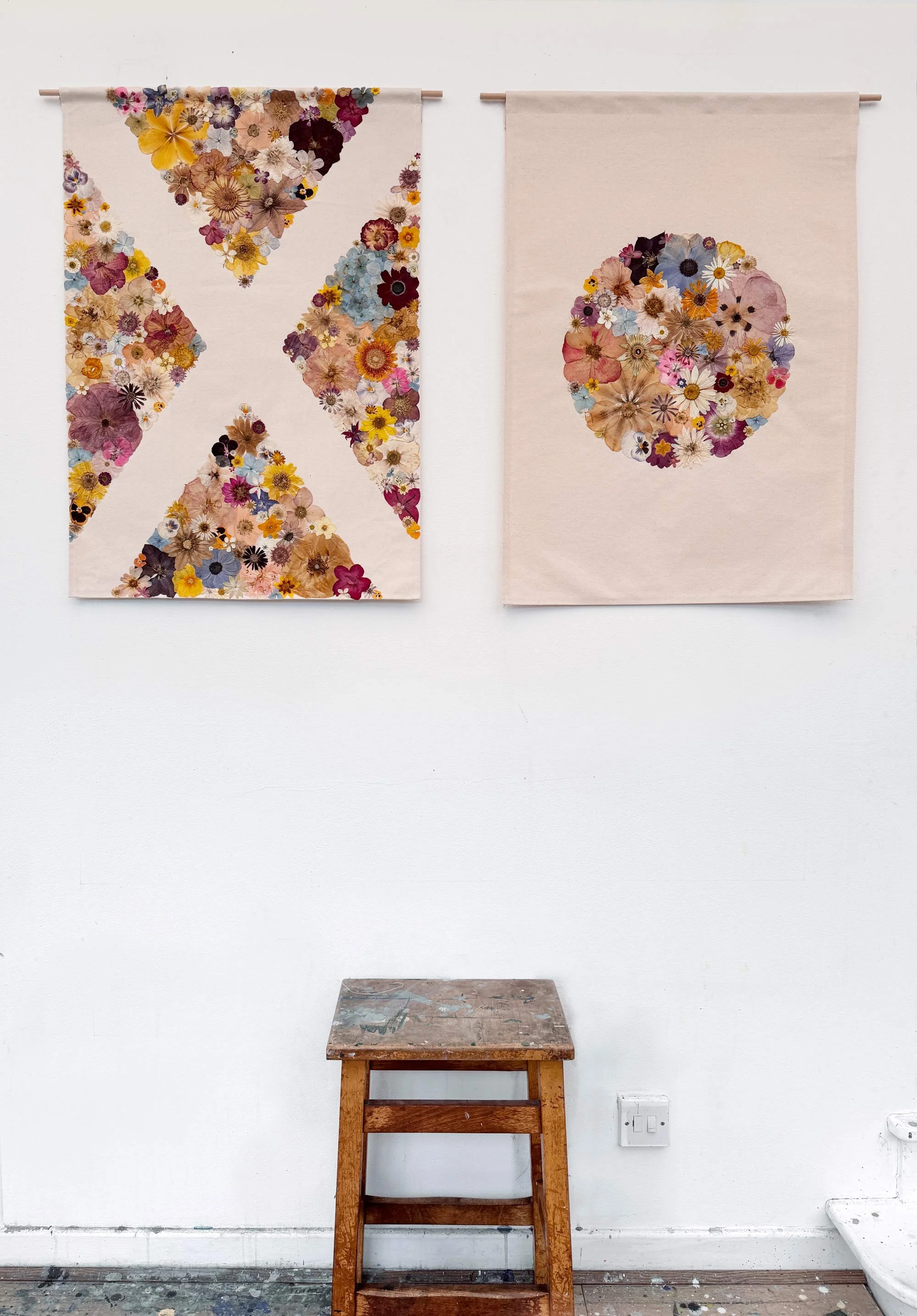
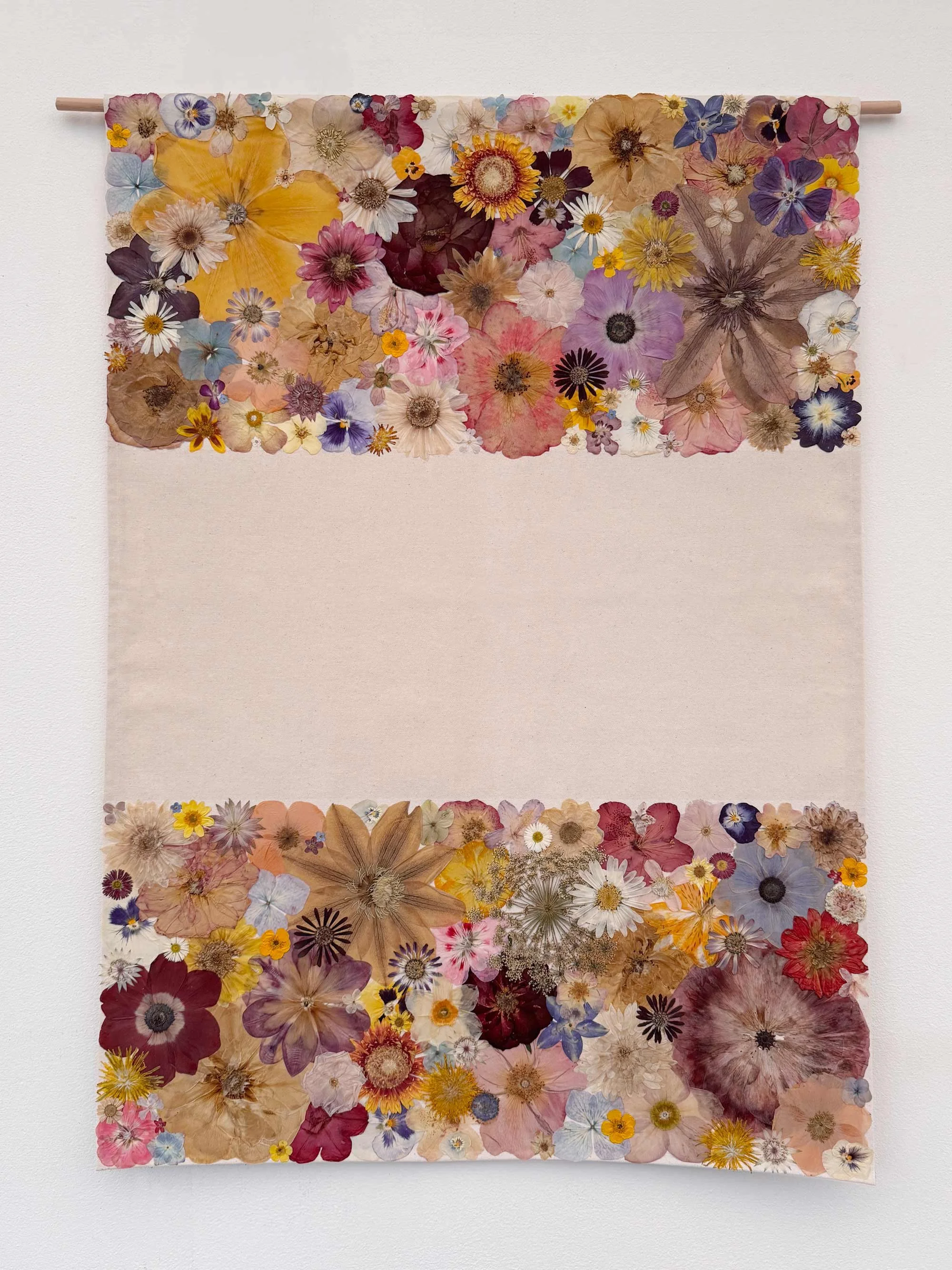
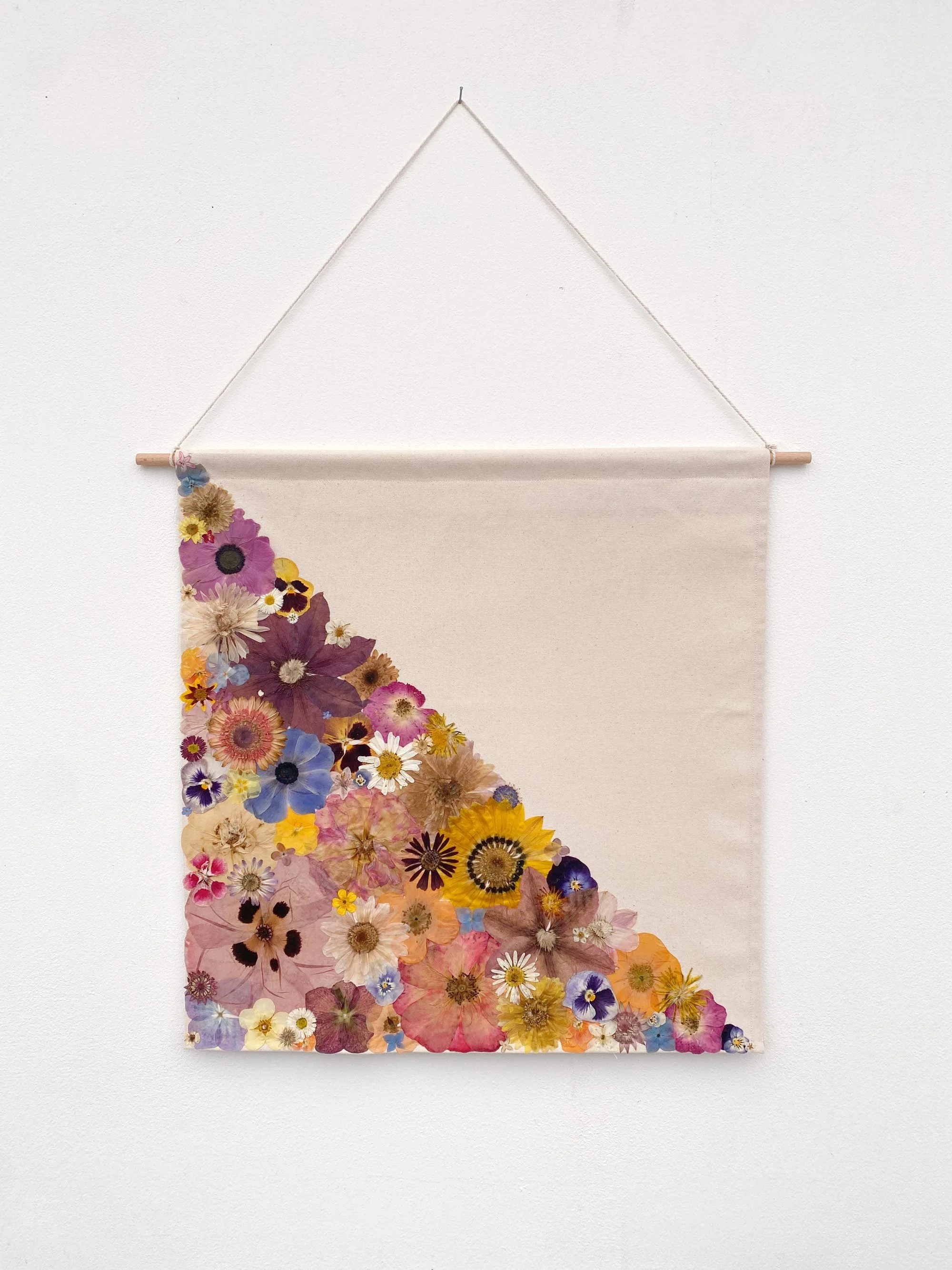
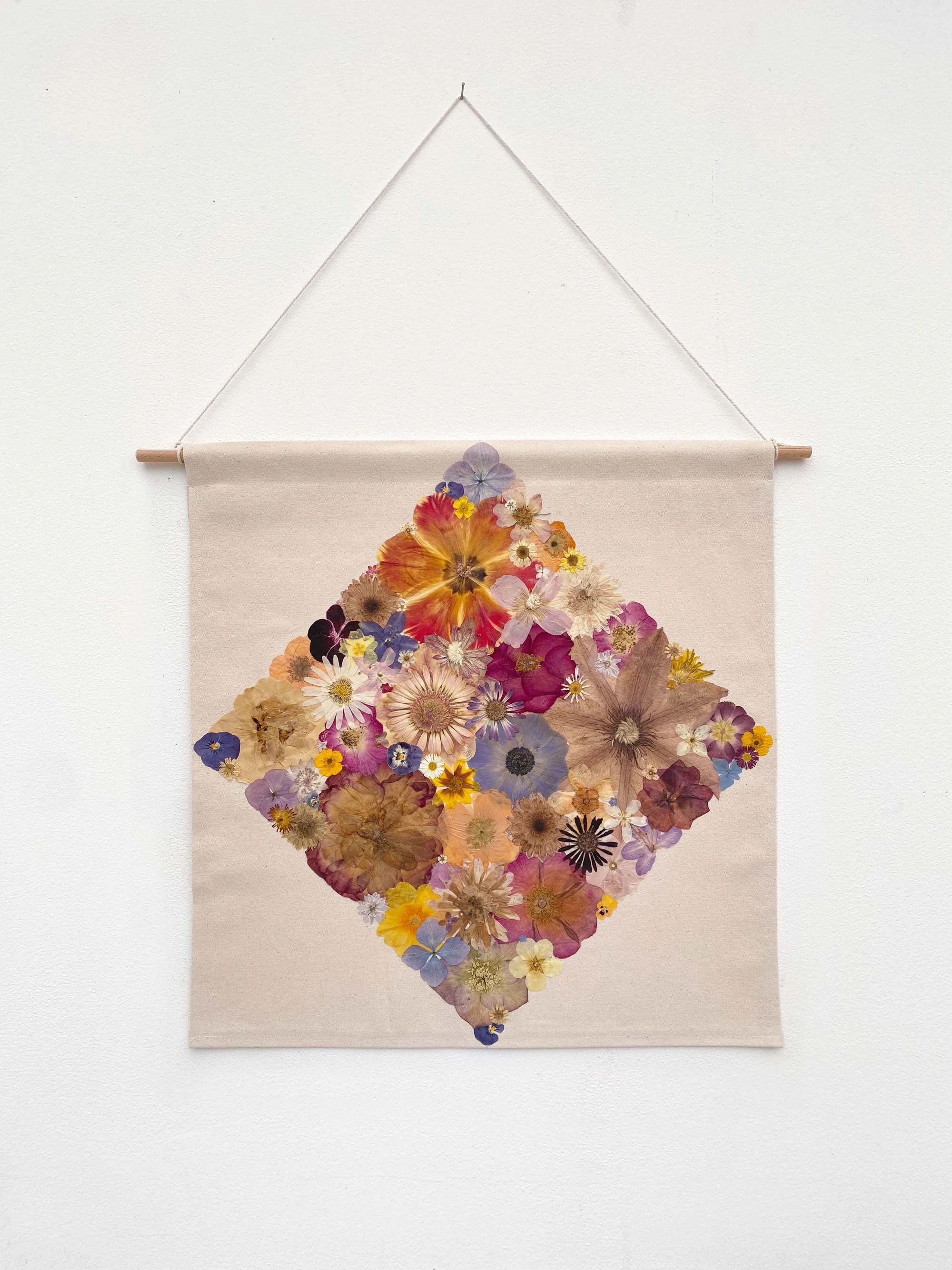
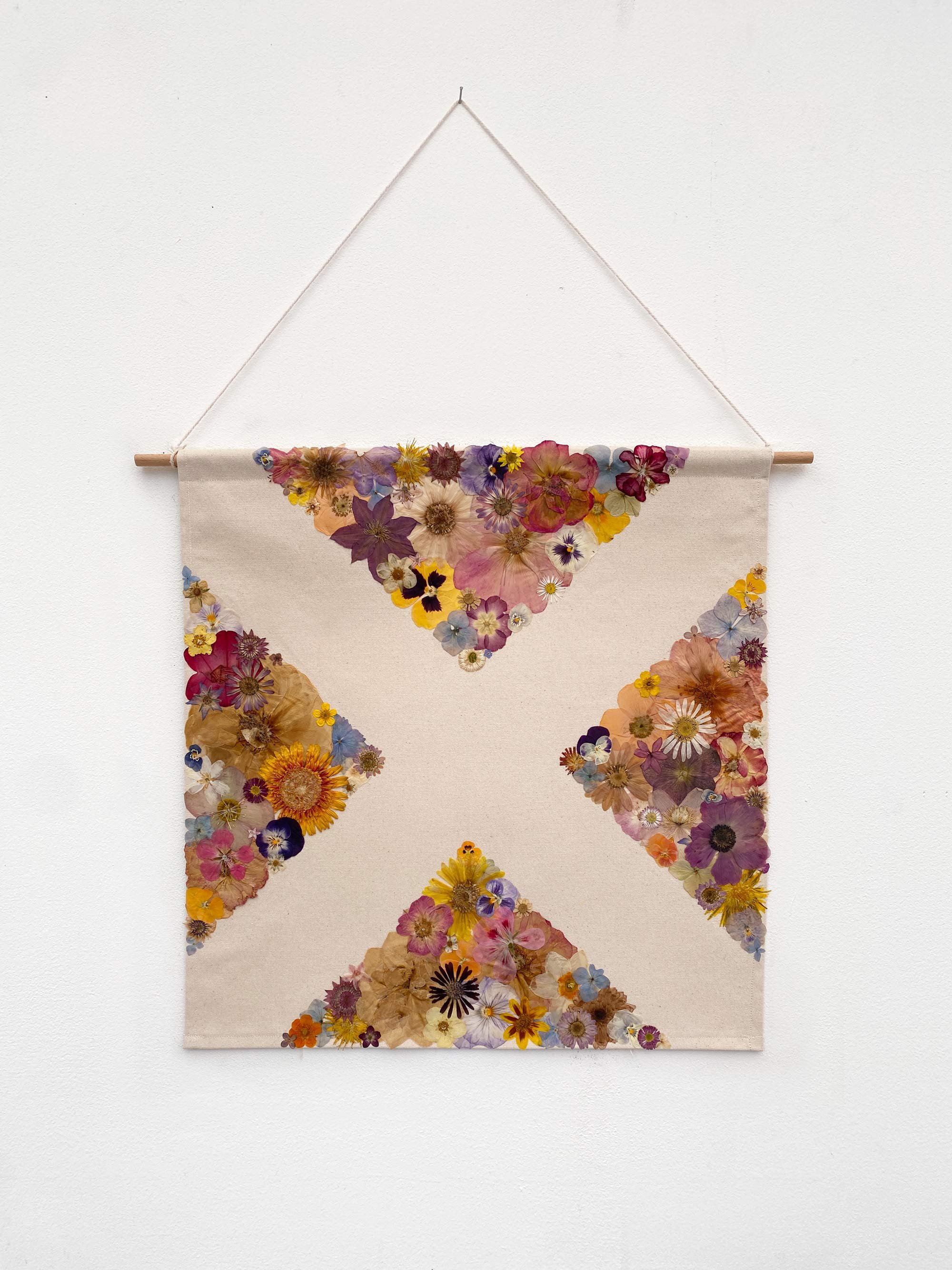
This body of work draws on the visual language of flags — simple, repeated forms such as stripes, blocks, crosses, and circles. These shapes appear across national flags worldwide, forming a shared, reduced system of symbols. Rather than representing any specific country, the works reference the idea of flags more broadly, using their most common structures as a starting point.

Historically, flags have been used to mark territory, assert ownership, and claim land. They are closely tied to ideas of power, borders, and control. Yet land exists independently of these systems. Nature does not recognise borders, and it predates the structures imposed upon it.

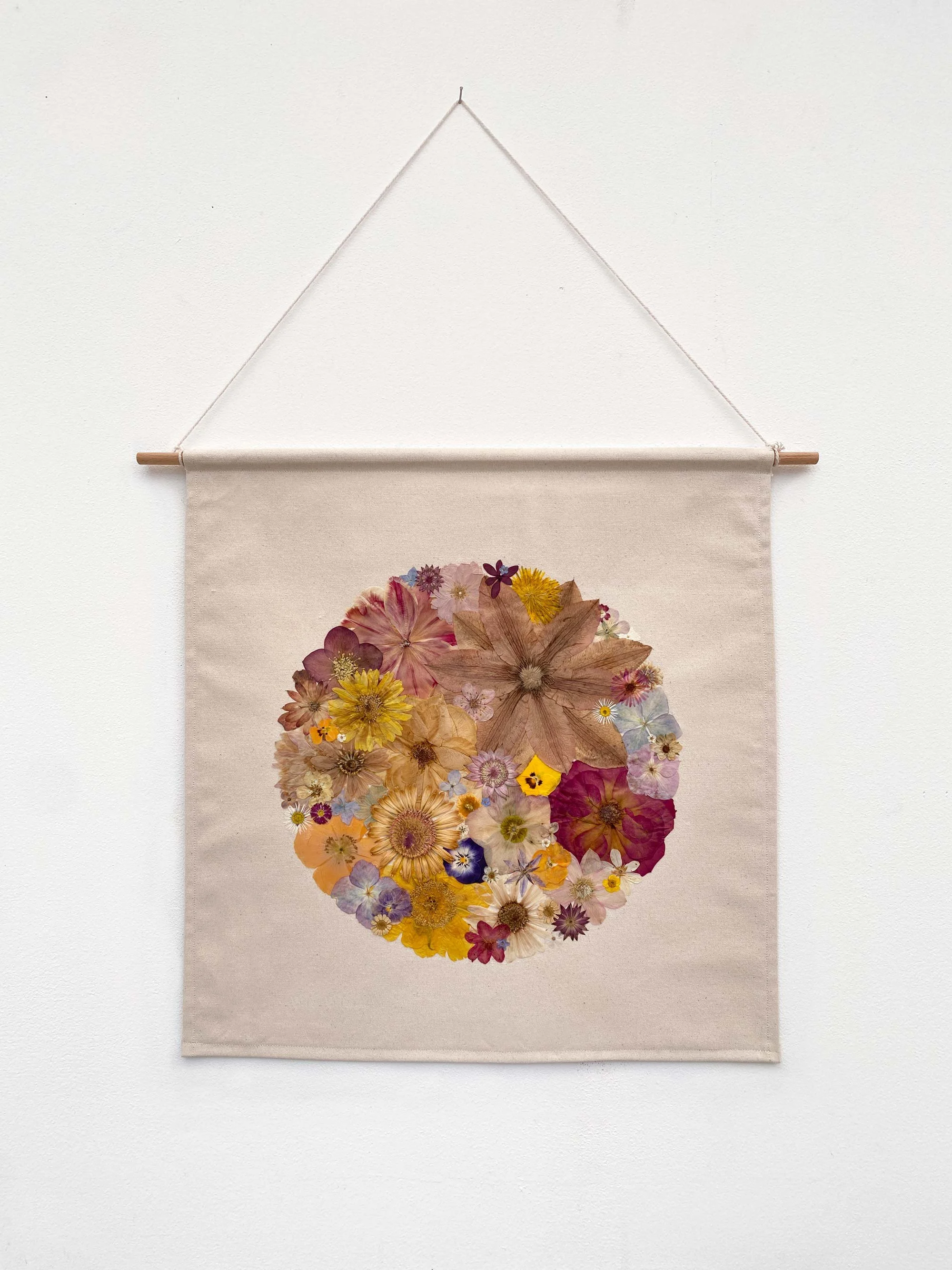
By constructing these flag forms from pressed flowers, the work introduces fragility and impermanence into symbols traditionally associated with authority and permanence. The materials soften the rigid geometry of the compositions, allowing colour, texture, and natural variation to disrupt their order.

All flowers are hand-collected and pressed using slow, traditional methods. Over time, they will change and fade. In this context, the flags shift from symbols of dominance to quiet reflections on place and connection, questioning ideas of ownership and reminding us that even the most fixed human structures are temporary.

Place without Possession

This series is all about reimagining traditional flags using delicate, hand-pressed flowers. I love that contrast. Using something natural and fragile to recreate symbols that are usually bold, powerful, and authoritative.